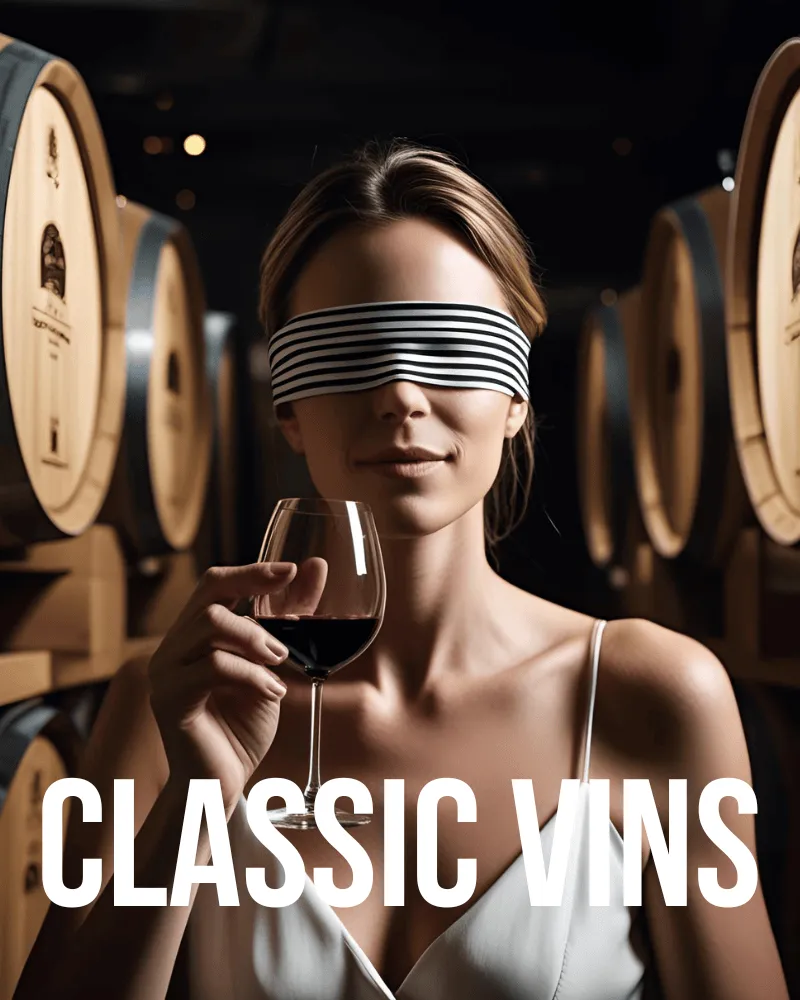
Of all the ways to taste wine—by theme, by region, by grape variety or vintage—blind tasting is often hailed as the gold standard. Why? Because it strips away every influence: no label, no bottle shape, not even a clue from the cork or screwcap. It’s just you and your senses. No safety net.
Yes, it’s hard. Yes, it’s humbling. But it’s also a brilliant exercise—whether you’re training your palate or simply putting your confidence to the test. And let’s be honest, it’s way more fun when a humble unknown wine steals the show from a big-name bottle.
At Classic Vins, we taste wines blind a lot (no surprise there!). It sharpens our judgment, reveals hidden gems, and—most importantly—helps us decide if a wine delivers real value and real pleasure. Because that’s what we care about: is it worth your money?
But here’s where it gets interesting. Blind tasting isn’t always as objective as it seems. Why?
-The Wine Itself Changes. Even the same wine, same producer, same vintage, can taste different from one bottle to another. Age adds more variability. And if you’re opening it on a stormy Tuesday versus a sunny Friday… well, some blame the atmospheric pressure. Others swear by the Biodynamic calendar. Whatever the cause, wine is alive—and unpredictable.
-The Taster Changes Too. Even pros aren’t immune to their own moods. A bad night’s sleep, a stressful morning, or even the weather can subtly shift perception. One day it’s a beauty, the next day it’s “meh.” The truth? We’re only human.
So while blind tasting is a powerful tool, it’s also a humbling reminder: wine is not a science, it’s a living art.
Cheers to discovering wines with open minds (and covered labels)!